HOW DOES it work ?

Establishing a Sheriff’s Office
Under the proposed Sheriff's Act, any Local Government Area may apply to the Minister for Justice to establish a Sheriff's Office. Applications must demonstrate a clear local need — such as unresolved civil matters, gaps in policing capacity, or regional remoteness — and include a detailed integration plan showing how the Office will connect and operate seamlessly with Queensland Police Service systems and protocols.
Councils must commit a financial contribution, with the State to cover the rest (or the full benchmark in cases of genuine financial hardship). This shared funding, plus mandatory community consultation and demonstrated support, ensures everyone's genuinely bought in to their success from the start.
Councils get faster response & fixes for local issues like theft, vandalism, or unresolved disputes without waiting on state resources that are stretched thin; communities get officers who actually live here, know the streets, and build real trust instead of distant patrols; and the State/QPS gets breathing room by offloading the civil enforcement and non-emergency calls so their officers can focus on the serious work that needs them most.
Once approved, each Sheriff's Office operates within a standardised state legislative framework, with staffing, resources, and funding scaled appropriately to the LGA's population, geography, and service demands — delivering targeted, community-focused support in partnership with Police.
What a Sheriff’s Office Does
The Sheriff’s Office gets real statutory powers to handle civil court orders (like evictions or debt enforcement), enforce local council laws (bylaws on parking, animals, noise, litter), keep public order in the community, and deal with summary offences. Deputies can step in on lower-level indictable stuff that can be dealt with summarily in the magistrates’ courts like stealing, wilful damage, or property crimes, etc.
Sheriffs and Deputies may carry firearms only after completing accredited training and ongoing proficiency assessments in line with QPS standards, and every operational action is recorded, uploaded, and subject to the same auditing & oversight as the QPS.
The Sheriff’s Offices cannot investigate criminal matters, such as murder, armed robbery, or serious drug trafficking. They do not possess forensics, aviation, or tactical teams, etc., and do not conduct high-risk operations except to preserve life in immediate emergency circumstances, with their powers strictly confined to the boundaries of their Local Government Area.
Handling Serious and Minor Offences
The Act will operate from a clear boundary between minor matters and serious crimes, defining when Sheriffs and Deputies may act independently and when matters must be handed to the police:
Everyday issues — handled locally:
Sheriff’s & Deputies are authorised to attend, investigate, and resolve non-serious incidents that impact daily community life and local compliance. These include:Noise complaints and neighbourhood disputes
Public disturbances without serious injury
Trespassing, vandalism, or graffiti
Minor assaults or property damage
Breaches of local ordinances and civil enforcement matters
This enables quick, proportionate intervention for lower-priority issues, enhancing community safety and reducing unnecessary demands on police resources.
Serious crimes — police take over:
In cases involving major offences, Sheriff’s Deputies may act solely to protect life, prevent immediate harm, and secure the scene pending the arrival of QPS. They do not undertake criminal investigations. The Queensland Police Service must be notified, with control transferred immediately upon QPS arrival.
What Can Deputies Do?
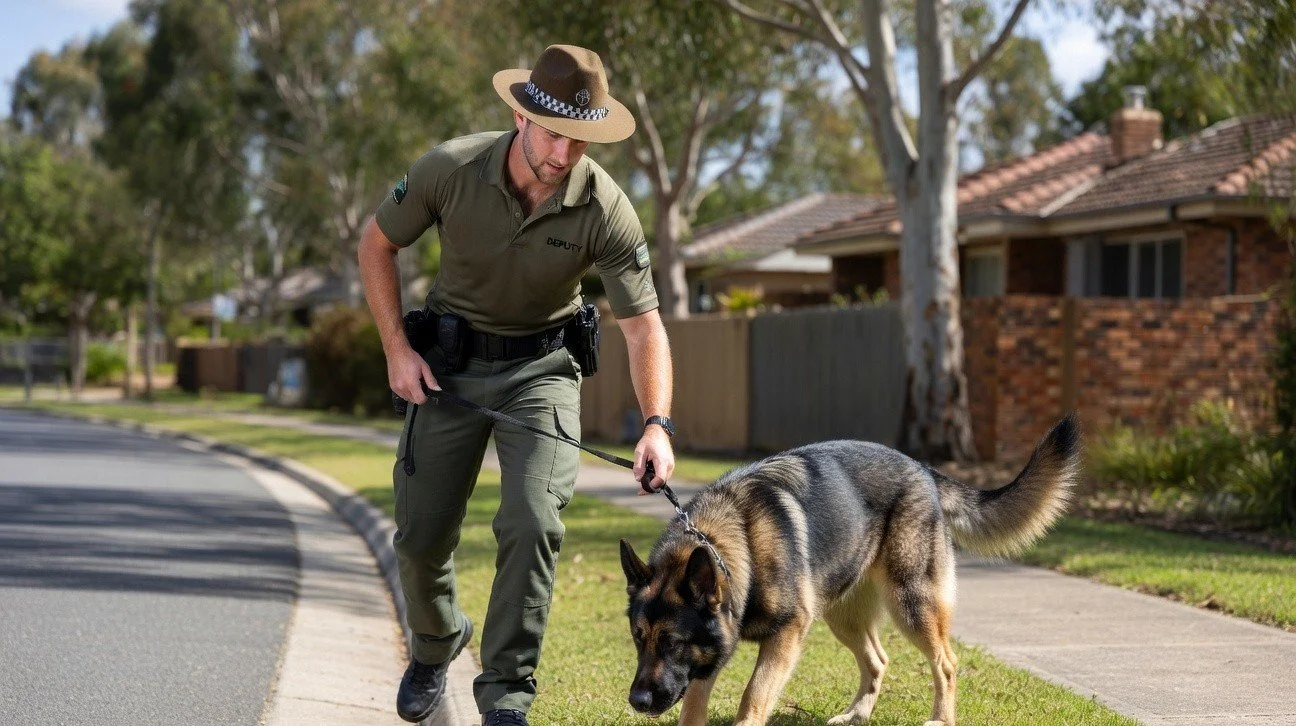
Deputy Sheriffs are trained, sworn officers who focus on everyday community safety and local law enforcement within their Local Government Area. Their role is to handle non-serious matters and provide a visible presence on the streets to respond quickly to issues the public feels need immediate attention. Deputies will be out on the streets, including CBDs, town centres, and community areas, conducting regular patrols to maintain order, deter minor offences, and respond promptly to public safety concerns such as disturbances, nuisances, or emerging problems before they escalate.
What Deputies can do:
Enforce local council ordinances and regulations
Serve court documents and carry out civil orders (evictions, warrants, debt enforcement)
Provide security at courts and public facilities
Conduct traffic stops for suspected impairment within their LGA
Respond to public disturbances, nuisances, and minor offences
Take statements and gather information for lower-level matters
They may also issue lawful directions to preserve the peace, require people to stop disruptive behaviour or move on where justified, and briefly detain individuals to prevent immediate harm or disorder (within legal limits).
What Deputies cannot do:
Deputies do not investigate serious crimes. They have no authority over major offences such as murder, armed robbery, or drug trafficking, and they do not lead criminal investigations.
What Is the Sheriff’s Role?
The Sheriff is the senior executive and operational head of the Sheriff’s Office within a Local Government Area. They set enforcement priorities, direct Deputy Sheriffs, and ensure that local laws, court orders, and civil matters are enforced lawfully, fairly, and consistently.
As the public face and accountable leader of the Office, the Sheriff is personally responsible for its conduct and performance. This includes compliance with all statutory limits, transparent reporting to the community, and formal coordination with the Queensland Police Service (QPS).
Operationally, the Sheriff leads the Office’s response to everyday law-and-order issues. This includes oversight of summary offences and Priority II indictable offences (generally offences carrying a maximum penalty of seven years or less), ensuring investigations are properly managed, evidence is lawfully prepared, and matters are progressed efficiently through the courts.
For serious crimes, full investigative authority remains with QPS. However, where a serious incident has a significant local impact, the Sheriff may be formally briefed or read into relevant aspects of the matter. This allows the Sheriff to provide local context, community liaison, victim and family support, and continuity of leadership — without duplicating or interfering with state police investigations.
Overall, the Sheriff’s role provides clear local leadership, faster and more focused handling of everyday issues, strong accountability to the community, and a structured, cooperative relationship with state policing—strengthening public trust while preserving proper legal boundaries.
Someone who gets local issues — with the Clear powers & RESPONSIBILITY to act.
Help bring a Sheriff’s Office to your community.